Showing posts with label politics. Show all posts

Saturday, September 18, 2010

The next Labour Prime Minister


As we move into the last days of the Labour leadership contest, it's worth wondering who will be the next Labour prime minister.

The problem is that, I suspect, it will be none of the above.

I don't think anyone takes the candidacy of Andy Burnham or Diane Abbot seriously.  That leaves the two Milliband brothers and Ed Balls.
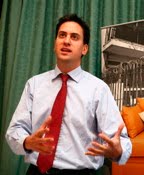
Ed Balls was Gordon Brown's closest advisor as he took Britain's economy from being the strongest In Europe to almost the weakest.  If he became the next Labour leader, the Tories would make hay with this.  As for the Milliband brothers, they have lacked political courage.  Where was Ed Milliband (a Blairite) when Tony needed him?  Why did David Milliband not challenge Gordon Brown for leadership of the party?

In short, the Millibands remind me too much of John Major, who was a decent man but an example of the Peter Principle.  Ed Balls was the architect of our current economic disaster and the others won't make it for one reason or another.

So where is the next Labour leader?  How do political parties recover from the kind of electoral collapse that Labour has seen this year?

In the case of the Tories, it took years and a few leaders to come right, but they did eventually regain power.  However, there can be a number of false starts along the way in any such process.  The Republicans in the the USA serve as an example of what can go wrong, being in danger of losing mid-term elections that should be won, as the radical Tea Party pulls them to extremes.

It would be a shame if this happened to Labour.  Democracy does best when there is a vibrant opposition, well led that poses a real intellectual and political threat to the government.  Sadly none of the candidates for Labour leadership look set to lead such a revival.  Ask any Tory which of these candidates he fears and the reply will come "None of them."

Years ago my elder son was running for election at university.  In addition to each of the candidates, the students had the option of voting for none of the above by ticking the RON (Re-Open Nominations) box, which they quite often did.  It's a pity that this option is not open to Labour voters, because if they want another Labour Prime Minister it won't be any of these five.

Thursday, July 08, 2010

Pickpocket Politics


If my memory of history serves me well, it was Charles I who was the last king to claim to be above the law. You may recall he was not entirely successful.

This was brought to mind this morning when, listening to BBC Radio4, I heard that the question of party funding is back on the political agenda. Indeed, according to Sir Hayden Phillips, state funding of political parties is inevitable.

The problem political parties in the UK face is simple: over the past few decades, membership numbers have collapsed but they have carried on spending regardless. The result is that the main parties are all in debt to a greater or lesser extent and have become increasingly dependent on a small number of donors.

Now, if political parties were run as a business or even a club they would do one of the following:

  • Make themselves or their products more appealling so that they would get more members or customers
  • Cut their spending to match their income
  • Go out of business

But if there is just one thing all parties agree on it is that their survival is paramount. So if the public won't voluntarily support them, then they will pass laws to take the money regardless.

This is corrupt. This is pickpocket politics.

The corruption infests all three main parties:

  • Labour gets millions from Unions such as UNITE, whose members by default have part of their dues set aside for Labour.
  • Liberal Democrats received millions from Michael Brown, a convicted fraudster.
  • Tories have received millions from among others Lord Ashcroft, who used non-dom status to minimise paying taxes in the UK.

This must stop.

Funding for parties needs to be legislated in such a way that opportunities for corruption are minimised: a fairly low limit on donations from individuals or organisations; legally mandated accounts which must balance: no state funding.

It's time that political parties learned that, like the kings of old, they are not above the law, nor should they be allowed to change it for their own ends.

Wednesday, July 07, 2010

Salamander politics


Remember Elbridge Gerry?

Mmm, I thought not. Yet it is he who has the distinction of being the source of the word gerrymander. Almost 200 years ago, as governor of Massachusetts, he arranged for the electoral boundaries of one district to be drawn in a contorted shape that would help his party win election. The shape was so bizarre it was likened to a salamander and the word gerrymander is a combination of "Gerry" and "salamander".

Strangely, the ability of politicians to manipulate electoral boundaries, remains a feature of US politics to this day, and one example of this is shown in the diagram above.

The reason I'm blogging about this is that "gerrymander" has become a favourite term of many Labour MPs in recent days. The word itself sounds evil, and such words are a delight to politicians. But is it accurate to use this word to describe what the coalition government is doing?

I think not. Tories have felt for some while that the electoral system has a built in bias against them because typical Tory constituencies have more people in them than typical Labour ones. The reason is because people are leaving the towns and cities (often Labour strongholds) for the country (typically Tory, at least in England). This means that, with more residents per constituency in the country, a country vote counts for less than a city one. Re-drawing boundaries to make constituencies have roughly the same number of residents is not gerrymandering: it's a simply matter of fairness.

However, since Labour would be the main loser in such an exercise, they are naturally keen to portray re-drawing boundaries in a poor light. This is a pity, because there is a real problem with voting in Labour constituencies and it's this: too few people register to vote in the cities. Why did Labour allow this to continue during its thirteen years in power? And why don't they focus on fixing it now?

Voter registration was a powerful tool in enabling equal rights in the United States in the 20th Century. Instead of fraudulently shouting about gerrymandering, Labour would be wise to learn from the American example and empower their residents to vote.

That would be good for British democracy and a way to bury the political legacy of Elbridge Gerry.

Monday, July 05, 2010

Cruel or Kind?

Well, it's the time of year that Total Politics builds its list of the top political blogs of the year.

I am not expecting to win it but, given I didn't even enter last year, any position would be good. So if you'ld like to vote for me, please click below.

Also please note the rules:

1. You must vote for your ten favourite blogs and ranks them from 1 (your favourite) to 10 (your tenth favourite).
2. Your votes must be ranked from 1 to 10. Any votes which do not have rankings will not be counted.
3. You MUST include at least FIVE blogs in your list, but please list ten if you can. If you include fewer than five, your vote will not count.
4. Email your vote to toptenblogs@totalpolitics.com
5. Only vote once.
6. Only blogs based in the UK, run by UK residents or based on UK politics are eligible. No blog will be excluded from voting.
7. Anonymous votes left in the comments will not count. You must give a name
8. All votes must be received by midnight on 31 July 2010. Any votes received after that date will not count.

Yes, yes, yes. This is me asking for your vote. I'm a politician. I've done it before.

So whether you do it by email or clicking below, please vote! And fyi, here are some of the more popular blogs and more here and here and here.

Click here to vote in the Total Politics Best Blogs Poll 2010

Sunday, June 13, 2010

How Often is Enough?


I believe it costs about £50,000 to run an election in Hart, the small district in NE Hampshire where I live. That's about a pound per registered voter, which I think is not bad.

The way we run elections here is that in three out of four years we elect one third of our district councillors (for a four year term) and in the fourth year we elect county councillors.

So, for example,

  • 2009: elected county councillors
  • 2010: elected 1/3 of district councillors
  • 2011: elect 1/3 district councillors
  • 2012: elect 1/3 of district councillors

However, there is the option of having all-in elections instead where we would elect district councillors all at once for a four year term, as we do with county councillors. In these straitened times, that would save us two elections every four years, or about £100,000. In a small district like Hart, that's a useful amount of money.

There is a contrary view that having elections more often gives voters a chance to register their approval or disagreement with the council more often. While that is true, it is costly. It also means that councillors spend more time electioneering and less doing the work you voted them in to do.

As you can tell, I don't favour the annual voting system. That's less important than what you think: would you, as a voter, prefer to vote more often at a higher cost, or would you prefer to save money but have fewer opportunities to register your views?

Please do let me know, either directly or via the comments section below.

Update: For what it's worth, based on a quick scan of their websites our neighbouring councils appear to vote as follows:

Basingstoke: Annually (like Hart)
Bracknell: All in every four years
East Hampshire: All in every four years
Surrey Heath: All in every four years
Wokingham: Annually (like Hart)

Tuesday, May 11, 2010

Trussssst in me ...

I was at a meeting last week. In an open question session the issue of trust was raised. The person answering the question was very clear: "Lack of trust comes from either a failure to communicate or a failure to deliver", he said.

Those words stuck with me. They really get to the crux of the matter. In light of the events of the last few days, can the Tories - or the electorate - trust the LibDems?

On May 7th, Nick Clegg said the Conservatives, as the biggest party, had the right to form a government first. Following that, negotiations were opened between the two parties. Yesterday it appeared that secret negotiations had been going on at the same time between Labour and the LibDems as well.

It's clear that the Conservatives have made significant concessions to the LibDems. It's far from clear what the LibDems have brought to the discussions. It's hard to view their actions as anything other than seeking party political advantage, despite their claims to be putting national interest first.

There may still be a Tory-LibDem pact of some kind. But if there is, it is difficult to imagine how well it will work when there is likely to be constant suspicion that at any time it suits them the LibDems may jump ship.

This is no way to run a country and, judging from LibDem blogs, there are many party members who realise the electorate may not forgive Nick Clegg, even if David Cameron does.

Saturday, May 08, 2010

DIY Tips: How to Build a Cabinet

The first time I built a bedroom cupboard it ended up with all the drawers the right way up and the frame and doors upside down. However, today's challenge is a mental one, rather than needing any physical dexterity, so perhaps I may do better (and perhaps not!).

Let's assume for a moment that the Tories and LibDems do form a coalition. Who would you appoint to the various roles? To make it more fun (a) you don't have to fill all the offices and (b) you can have a serious list or a fun or even mischievous list. Here is mine.


Prime Minister: David Cameron
Chancellor: Ken Clarke, because he's done it before and would reassure the City.
Foreign Secretary: William Hague
Home Secretary: Nick Clegg
Olympics: Sir Menzies Campbell
Business, Innovation and Skills: Vince Cable

with the rest being the Tory shadow cabinet. This gives one of the great offices of state to the LibDems, puts a past captain of the Great Britain Olympics team in charge of the Olympics and gives Vince Cable the challenge of making his ideas work.

For the Tories, Ken Clarke would bring immense successful experience to the position, and it's hard to realistically imagine Hague or Cameron in other roles. Not in the above list but worthy of mention is Michael Gove, who would have the opportunity to make his radical and attractive ideas on education work. The more I see and hear of Gove, the more I like him: he could be a real star of the next government.

What of George Osborne? Make him chairman of the Conservative Party. There are persistent stories that "the City doesn't like him" and we really need the next government and the City to work together to rebuild the economy. And who knows? He may be like a vintage wine that matures well.

---

For reference, the last government cabinet posts were

Prime Minister, First Lord of the Treasury and Minister for the Civil Service
Leader of the House of Commons and Lord Privy Seal
Secretary of State for Business, Innovation and Skills, First Secretary and Lord President of the Council
Chancellor of the Exchequer
Secretary of State for Foreign and Commonwealth Affairs
Secretary of State for Justice and Lord Chancellor
Secretary of State for the Home Department
Secretary of State for Environment, Food and Rural Affairs
Secretary of State for International Development
Secretary of State for Communities and Local Government,
Secretary of State for Children, Schools and Families,
Secretary of State for Energy and Climate Change,
Secretary of State for Health, Secretary of State for Northern Ireland,
Leader of the House of Lords and Chancellor of the Duchy of Lancaster,
Minister for the Cabinet Office, and for the Olympics and Paymaster General,
Secretary of State for Scotland,
Secretary of State for Work and Pensions,
Chief Secretary to the Treasury,
Secretary of State for Wales,
Secretary of State for Defence,
Secretary of State for Transport,
Secretary of State for Culture, Media and Sport

Friday, May 07, 2010

Bite the bullet


If there's one thing the electorate expects of politicians it's that they run the country.

At 11am today, this seems like a challenge. With 30 or so seats still to declare, no party can get a majority. The way the rest are likely to go:

  • A coalition of Labour and LibDems would not have a majority
  • A working arrangement between Tories and Irish Unionists would similarly fail
The markets hate this. The FTSE is down 10% since the likelihood of a hung parliament became clear. The pound has slipped on forex markets. The reason is simple: without a strong government, it's likely that the hard choices urgently needed to fix the economy won't be made.

As a Tory, I wish we had a majority. The reality is that we don't. That leaves two choices: either a minority Conservative government or an agreement or coalition government with the LibDems.

For many Conservatives, working with the LibDems is anathema. There are many LibDems who feel the same way about Tories. There is a simple message for these hardcore party members: stick to your position and voters will reject you at the next election. You have to put the interests of the nation first, and the nation needs a strong government now.

It's time to face reality. Things didn't go as well as the LibDems or Tories had hoped.

Deal with it.

Tuesday, May 04, 2010

Precisely Wrong


As I write, Sky News are reporting various polls with Tory support between 33% and 37% and LibDem support between 23% and 28%. The parties and commentators hang on every percent with elation or despair.

But they are wrong to do so.

These polls are spuriously precise (which we don't really care about), but not necessarily accurate (which we desperately do). If, for example, a pollster says Tory support is 35%, what they mean is something like this:

"I am highly confident that Tory support is 35%, give or take 3%. When I did the sample. And that is if people are telling the truth."

See those bits in bold text. What they mean is that if you take those numbers as being accurate, more fool you. It's a statistical game and you need to remember that. Don't be in raptures when your party goes up a percent or two on in despair when it's down a percent or two: that may well just be "sampling error".

All you can really conclude from today's polls is that the Conservatives are a bit ahead and LibDems and Labour are neck-and-neck.

Probably.

So get back to your campaigning, before the Fat Lady sings.

Sunday, May 02, 2010

Three of the Best


As a Tory, I hope the Conservatives win a majority.

As a realist, I accept this might not happen. I think a hung parliament would be bad for the UK, but perhaps it's time to think the unthinkable: what if we get one?

The most likely coalition, I hope, would be Tory/LibDem. So here's a challenge: if that came about, which three policies would you like to see the new government implement? The rules are simple: you must choose one Tory policy, one LibDem and the third can be from either party, or perhaps one of your own. Here are mine.

Education

The Tory policy here looks excellent, as I've written earlier. It's a real incentive for improvement and in a globally competitive world, nothing is more important than a good education.

Tax

I am sorry, but I love the LibDem proposal to raise the threshold at which you pay tax to £10,000. It's almost a Tory policy, it simplifies tax and it's a vote-winner.

Tax again

A policy of my own: eliminate 95% of tax law, and make the UK a better place to do business. Sustained recovery will depend on people wanting to do business in this country, yet our tax code is incredibly complicated.

So that's my three. What would you choose?

For your information you can get the Conservative manifesto here and the LibDem one here.

Wednesday, April 28, 2010

No thank you, Gordon

From the man who "abolished boom and bust" comes the request to let him "finish the job". No matter which party you support, the reply must be "No, thank you." Here's why.

In 1997, the new Labour government inherited a thriving economy. By many measures, it was the strongest in Western world, with inflation low, debt low and unemployment dropping.

By April 2010, the UK economy was arguably the second worst after Greece's. National debt is higher than any time in living memory, excluding post-WW2. There is a good summary of the debt here, together with several clear charts. Debt is also forecast to increase for the next few years by well over £160 billion each year.

Let's put that in perspective: that's more than we spend on education, police and defence put together. If we shut down all our schools, closed all the police stations and disbanded our army, navy and air force we'd still be running up debt under Labour's economic policies.

So, no thank you Gordon Brown. You're a spendthrift. We don't want you to finish the job because we know in reality you would finish the country.

Sunday, April 25, 2010

Thank you, Nick Clegg


It's been 10 days since Nick Clegg upset British politics with a strong performance in the first of the leaders' debates. At this moment, he appears to have lifted the Liberal Democrats from their traditional poor third place in British politics to a close second. In addition, he's changed the nature of the debate: young people, normally the least likely to vote, are chatting eagerly about politics at work, in universities and online. A lot more of the discussion is positive.

Most importantly, from my point of view, Clegg appears to have done what no other politician has managed in recent years: he's finished off Gordon Brown as a political force.

And you can't deny he has sex appeal. I was speaking to a young lady (remember I am over 50, so anyone under 30 is young) the other day and she was singing Clegg's praises. She'd never talked about politics before. I don't recall her exact words but in essence she said that previously she hadn't intended voting but now she was going to vote LibDem. Clegg, she felt, would make a great prime minister: well-spoken, clear ideas, representing real change, fresh, and so on. "What do you think of LibDem policies?" I asked. With a slightly embarrassed smile she admitted she didn't know much about the policies.

Actually, at this stage, that's OK. The important thing is getting young people interested and involved. Over the next ten days they will learn a lot about politics. Some will stay LibDem; others will find that once that first glow of romance dies out then they'll choose another party and I expect they will see a lot to encourage them in the Tory Party: sound finance, green policies and genuine caring about the individual. No party gets everything right but the Tories do more than most.

Democracy is at its best when it's vibrant and ideas and ideals are debated with good-natured passion. There are many young people who will become Young Conservatives who might never have shown any interest without the debates and the change they have brought to British politics.

So, indeed, I would like to thank Nick Clegg today for the change he's made in politics.

Wednesday, April 21, 2010

Vince Cable - Economic Expert

Andrew Neil (who chairs the BBC's parliamentary programme) interviews Vince Cable.


Thank you, Guido.

Tuesday, April 20, 2010

Who will you choose?

Thank you, Ian Dale, for creating this.

And for all my friends and acquaintances who are not sure whether they should vote this time ... well have a look!

Sunday, March 21, 2010

It's the Economy


I once saw a Chinook fly like the one in the picture. It had done a rolling landing, with its nose in the air, paused, reversed and then taken off backwards and gradually raised its tail until this 20 tonne monster was hanging in the sky, nose down and facing me. I remember clearly this sense of utter disbelief that such a thing was possible.

I feel the same way when I listen to our leading politicians discuss the economy.

We have so much government debt in the UK that the interest bill alone is almost £30 billion pounds a year. This will continue to increase until we stop spending more than the government gets in income.

So we need to do two things: reduce spending and increase income. The only challenge is how to do these without harming the economy further.

On reduced spending, it's time for the Tories to back off their pledge not to cut the NHS. It's the fourth largest organisation (by employees) in the world. There has to be significant inefficiency in there and turning a blind eye to it does no-one any good. The only budget that should be sacrosanct is Defence, and that should last only as long as we have a major commitment in Afghanistan.

It's also time to change the terms on which people get unemployment benefit. Those claiming this benefit should earn it, literally. They could work two days a week for the government, using whatever skills they have. That way, at no incremental cost, the government gets a great deal more done, whether surgery or street sweeping. It would improve the quality of life of everyone in the UK. In times of hardship, this is an obvious win.

Many people in private enterprise go without pay increases in tough years. I know in the 1990s I had no salary increase for three years, as did most of my colleagues. It's time to impose the same stringency on the public sector and, while we are about it, to get rid of unaffordable final salary pensions. They have been unaffordable in the private sector for years and there is no magic which makes them affordable for civil servants.

Raising more tax is a challenge. In the short term you can aggressively tax the highly-paid and profitable companies but if you do, in the long term they will leave. In other words, it's self defeating.

The alternative is not difficult: make it attractive for businesses and high-earning people to stay in the UK and, indeed, attract other businesses here as well. We have the most complicated tax laws in the Western world. That raises the costs of doing business here. We need to do away with 90% of this and make the UK a place where it is easier to do business. Bring tax down and attract business to the UK.

Two weeks ago Matthew Parris wrote that the first thing a new Tory government should do is pass a "Blanket Repeal of Legislation (Failure of New Labour, 1997-2010) Bill". As he explains "The effect of the Act will be to repeal en masse and at a stroke all new legislation brought in since the fall of the Conservative government in 1997. The only exceptions will be those measures which, by affirmative resolution of both Houses, Parliament votes to rescue."

Yes! Yes! A thousand times yes!

While we are about it, can we get rid of an enormous amount of duplicated effort countrywide? We do not need each of 389 local councils to create a policy on racial equality. It's the law. Get on with it. The same goes for the many of policies and practices in local government. We really don't need every council to have its own system of voter registration, email, benefits management or a dozen other matters. For heaven's sake, stop wasting time and let's get those bins collected and schools run well.

In short, and I am aware this is a long blog entry, if we want to cut the cost of government we need to stop waste - huge amounts of waste.

I remember clearly standing by and doing nothing other than goggle in disbelief while the Chinook flew at an impossible angle. It was being run by professionals who knew what they were doing. But I won't stand by and gape in disbelief at politicians, who appear astonishingly inept, doing little to fix the economy.

In 1992, Bill Clinton devastatingly used the line "It's the economy, stupid" in his election campaign. It's time UK politicians listened.

Friday, November 27, 2009

Golfing for Cats


The late humorist Alan Coren had a deft way of dissecting his victims. In one particular article he depicted the Inland Revenue (the tax man for those not in the UK) as Nazi storm troopers, inflicting terror on small businesses. The reality behind the wit is that indeed the Inland Revenue has truly frightening powers under the law, but rarely uses them.

One has to wonder whether Alan Coren was prescient.

Since the tragic events of September 11th, 2001 (and 7th July 2005 bombings in London), Western governments have acted to preserve our liberty. Often it appears that they preserve our liberty by removing it:


Earlier this month, the government proposed to give power to a wide range of civil servants and council officials to spy on UK citizens by giving access to every phone call, email, text message and other electronic communication.

It's time to stop this assault on our liberty.

Hart District Council is one of the smallest councils in the country. Last night we discussed the extent to which existing powers have been abused and the extent to which proposed power might be. We voted overwhelmingly to direct our council officers not to use these powers except where they are obliged by law to do so.

It's a small step, but it represents an important change in direction in winning back our freedom, not from terrorists but from Government interference.

I hope Alan Coren would have approved (although he may well have poked fun at us while doing so).

Footnote: Why "Golfing for Cats"? Alan Coren explained simply he was choosing a book title to appeal to the widest possible audience. He is missed.

Saturday, October 17, 2009

Little Miss Perfect


More than 25 years ago, a customer of mine and his wife were expecting their first child. This man was inherently cheerful: the kind of person you look forward to meeting in a business day. When I heard that the Big Day had come and the child been born, I popped into his office with happy congratulations which had left my lips as I entered. It was too late to register the grey and shocked expression which he could not hide. The child had been born healthy, but with Downs Syndrome. I have always been poor with words in such circumstances and all I could say was how sorry I was, and inwardly berate myself for not having checked if all had gone well before bursting in with a happy smile on my face.

It's something all expectant parents must worry about at least a little: what if Baby isn't perfect? For the vast majority, a counting of fingers and toes and a verbal thumbs up from the medical staff is a happy start to parenthood. The shock can therefore hit perhaps even harder when you learn later in life that Something is Wrong.

For Colleen and I, this happened with our second child Anthony. A bouncing baby and sturdy toddler (I nicknamed him Barrel, which given his adult wiry frame is ironic) he was a happy child who developed normally up to and including starting to talk. Then he went backwards and said less and less. Family and friends reassured us of famous people they knew who were late starters, but the worry started to grow. Cutting short a very long story of two years' worth of visits to specialists and speech therapists, at the age of four we were told he was autistic and enrolled him in the Key, the Johannesburg school for autistic children. His vocabulary at that age was less than a dozen words.

And then the miracle occurred. Autism is not curable (as far as today's science knows) and yet within weeks Anthony's vocabulary came on at staggering speed. After a year's intense speech, occupational and music therapy his development had pretty much caught up with other children his age. Within the next year he was ready to attend mainstream school. Please forgive a brief boast that he graduated with an excellent degree from Bristol this summer and, equally important, he has a large group of friends. He clearly couldn't have been autistic, but the important point I'd like to make is that somehow the teaching and support he received in those two years at the Key changed his life unimaginably for the better.

These memories came back yesterday when I received a press release from Parliament. The Science and Technology committee is investigating two pretty fundamental elements of government policy (1) What actually is the policy? (2) On what evidence is the policy based? This may sound simple: actually it's radical, making the assumption that government policy should be based on things that have been shown to work, rather than (perhaps) political expedience.

The first investigation will look at reading difficulties and dyslexia and how these are addressed today by government policy. The committee is looking for evidence as to how well this works. I include the full press release below: if you feel you can contribute, please do so now: the closing date for submissions is 26th October, just nine days away as I write this.

Basing government policy on evidence seems obvious. Please help make it happen so that even when a child isn't born Little Miss Perfect (or Master Perfect) they still have a good chance in life.

SCIENCE & TECHNOLOGY COMMITTEE
Select Committee Announcement

Committee Office, House of Commons, 7 Millbank, London SW1P 3JA
Tel. No. 020 7219 2794 Fax. No. 020 7219 0896 Email: scitechcom@parliament.uk


No. 04 (08-09): 16 October 2009

NEW INQUIRY

EVIDENCE CHECK: LITERACY INTERVENTIONS

In preparation for the establishment of the Science and Technology Committee on 1 October, the former IUSS Committee commissioning work to assess the Government’s use of evidence in policy-making. The Committee wrote to the Government on a number of topics and asked two questions: (1) What is the policy? (2) On what evidence is the policy based? The Government has now replied and having considered the responses the Committee has selected Literacy Interventions for its first Evidence Check.

The first Evidence Check will consist of two sessions on 4th and 9th of November. The Committee invites short submissions by 26 October on the issues that the Committee will be exploring:
— the Government’s policy on literacy interventions for school children with reading difficulties
— the evidence base for the Every Child a Reader and Making Good Progress programmes
— the definition of dyslexia
— the evidence base for diagnosing dyslexia and teaching dyslexic children to read.

Each submission should:
a) be no more than 1,000 words in length
b) be in Word format (no later than 2003) with as little use of colour or logos as possible
c) have numbered paragraphs
d) include a declaration of interests.

A copy of the submission should be sent by e-mail to scitechcom@parliament.uk and marked “Evidence Check 1”. An additional paper copy should be sent to:
The Clerk
Science and Technology Committee House of Commons
7 Millbank
London SW1P 3JA

It would be helpful, for Data Protection purposes, if individuals submitting written evidence send their contact details separately in a covering letter. You should be aware that there may be circumstances in which the House of Commons will be required to communicate information to third parties on request, in order to comply with its obligations under the Freedom of Information Act 2000.

Please supply a postal address so a copy of the Committee’s report can be sent to you upon publication.

A guide for written submissions to Select Committees may be found on the parliamentary website at: www.parliament.uk/commons/selcom/witguide.htm

Please also note that:
— Material already published elsewhere should not form the basis of a submission, but may be referred to within a proposed memorandum, in which case a hard copy of the published work should be included.
— Memoranda submitted must be kept confidential until published by the Committee, unless publication by the person or organisation submitting it is specifically authorised.
— Once submitted, evidence is the property of the Committee. The Committee normally, though not always, chooses to make public the written evidence it receives, by publishing it on the internet (where it will be searchable), by printing it or by making it available through the Parliamentary Archives. If there is any information you believe to be sensitive you should highlight it and explain what harm you believe would result from its disclosure. The Committee will take this into account in deciding whether to publish or further disclose the evidence.
— Select Committees are unable to investigate individual cases.

Wednesday, September 02, 2009

Compassion for the criminals


I know this may seem an odd question, but why are we engrossed in showing compassion to out-and-out criminals?

According to the BBC website, the Foreign Secretary, David Miliband, didn't want Abdelbaset Ali al-Megrahi to die in prison. Why not? AAaM was almost 49 when in 2001 he was sentenced to life imprisonment for the worst terrorist atrocity in British history. There had to be every expectation that he would die in prison. Why would this invoke a moment's thought, even less compassion, on the part of David Miliband?

And then there's the case of Ronnie Biggs. Sentenced to 30 years' imprisonment for his part in the Great Train Robbery, he's spent a total of about 9 years inside before being released on compassionate grounds.

If we're going to show compassion - and there are many cases where we should - let's show it to people who can reasonably claim to be deserving of it. If we were to draw up a list of such cases, I suspect Biggs and al-Megrahi would be at the bottom of it.

Friday, August 21, 2009

You Guys Give up Yet? Or are you Thirsty for More?


There's been a bit of a stir in the military-political world this week. Somebody has been briefing against General Sir Richard Dannatt, the Chief of the General Staff in the UK. It would appear that General Dannatt has made the mistake of telling the truth about what the armed forces really need and someone, presumably in government, didn't really like it or the implied criticism. So they started a campaign of rumours against General Dannatt.

A blogger called Guido Fawkes identified the origin of the smear campaign as Kevan Jones. An awful lot of people are very supportive of our armed forces, and the revelation of the presumed source of the smear led to a torrent of anger in Guido's blog.

Now comes the interesting bit. Kevan has an entry on Wikipedia. And at this point, someone decided it needed updating. Some of the updates weren't complimentary. Wikipedia has an army of editors to "correct" such matters and they can even lock an entry to prevent "vandalism". However, they leave a trail of what was previously there. It makes interesting reading in Kevan's case.

The title of this blog entry is, by the way, from Kevin in the 1980s film Home Alone. Kevan would do well to think about it.

Wednesday, August 05, 2009

Keep Them Honest with Evidence


"Politicians! They're so transparent and cynical! They never do the right thing - they do what's best for them!"

Ever felt like that?

Then here's a chance to change things, just a bit.

The Innovation, Universities, Science and Skills Committee is looking for suggestions of areas of government policy that require an ‘evidence check’. In theory as a result of the hearings the government will be more likely to make sensible decisions, based on evidence.

So if you'd like them to investigate an area of government policy which you believe does not have a good basis in fact, read here and write to them.

And let's start making government better.